
From Nothing to Something | Root Access Devlog #7

I want to do share the current progress of the project this week.
There are moments where I can check on my progress, where something that didn’t exist a few weeks ago is suddenly there and working. And then I look at how far there still is to go, and the two feelings sit next to each other in a way that is hard to describe. Proud, but grounded.
That feels about right for where this project is.
Stage 1: The Codebase
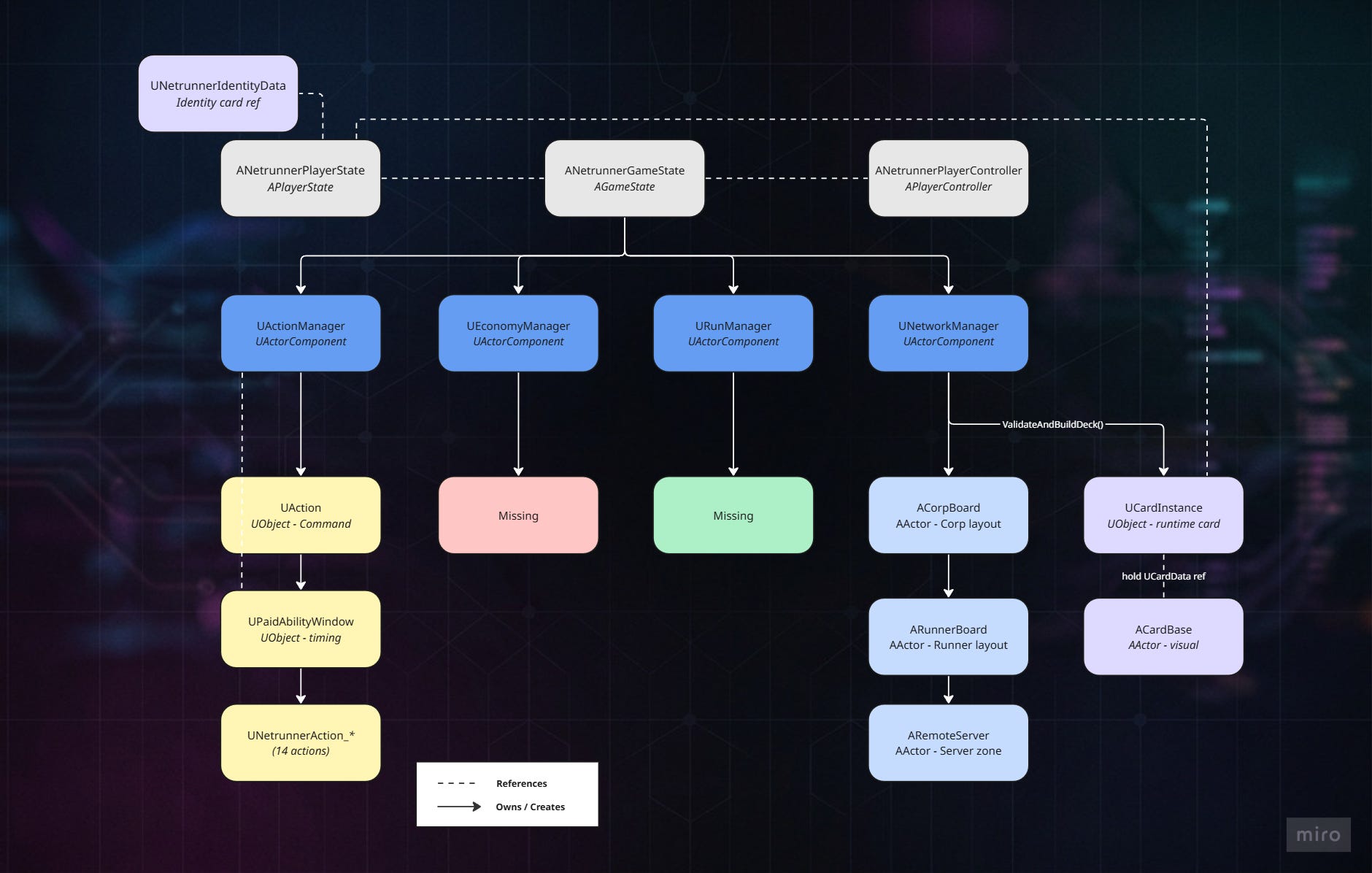
It started with nothing visible at all. Just code. Data structures, card definitions, game state logic. The invisible foundation that everything else would eventually sit on top of. There was no board, no cards on screen, no interface of any kind. Just a server that knew what a card was, what a player was, and how the two related to each other.
This is the stage that is hardest to show and easiest to underestimate. Nothing looked like a game. But without this, nothing that came after would have been possible.
Stage 2: Pseudo Cards
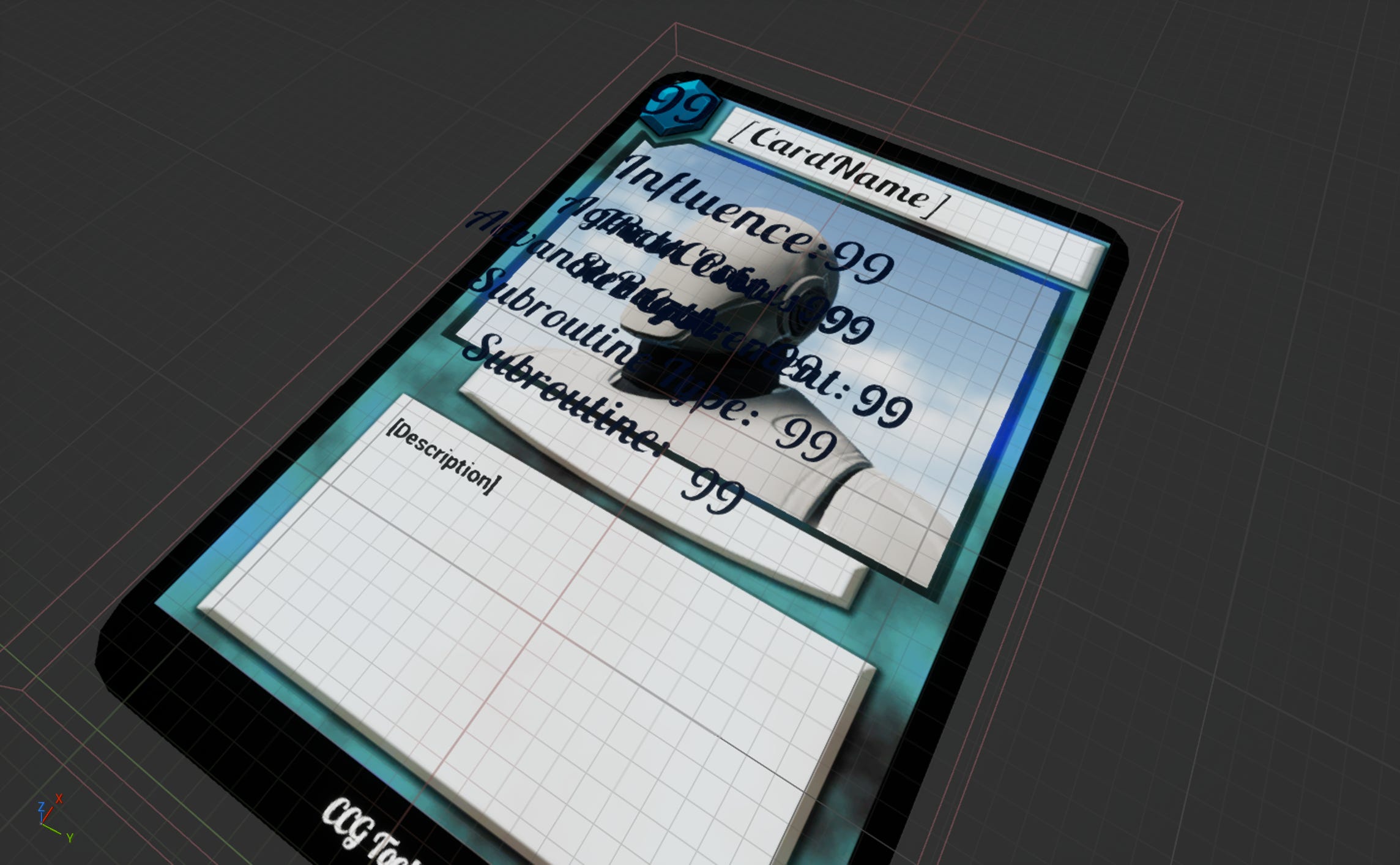
Before real card data existed, I needed something to test against. I created a list of pseudo cards, just placeholders definitions that had the right shape without being the real thing. Enough structure to run logic against, enough variety to expose edge cases (hopefully, however, It never catches everything).
It’s unglamorous work. But it’s the kind of unglamorous work that saves you from discovering fundamental problems much later, when they are far more expensive to fix.
Stage 3: 2D Cards
This was the first moment it started to feel like something.
Cards appearing on screen. A hand that held them. A player that could look at what they’d drawn. The information flowing from the server → card names, costs, types → down to the client and into a 2D widget that displayed it correctly.
Seeing a card on screen for the first time, knowing that the data behind it came from the server and was filtered correctly before it arrived, was a quietly significant moment.
Stage 4: 3D Cards
The next step was the transition from hand to board. When a card is played, it stops being a flat 2D widget and becomes a 3D actor in the world, a physical presence on the table rather than a UI element in your hand.
Getting this right meant the card information had to travel cleanly from the server, through the 2D representation in hand, and into the 3D actor when it hit the board. The data pipeline had to hold together across that entire journey without losing anything or misrepresenting anything.
Stage 5: Board Layout
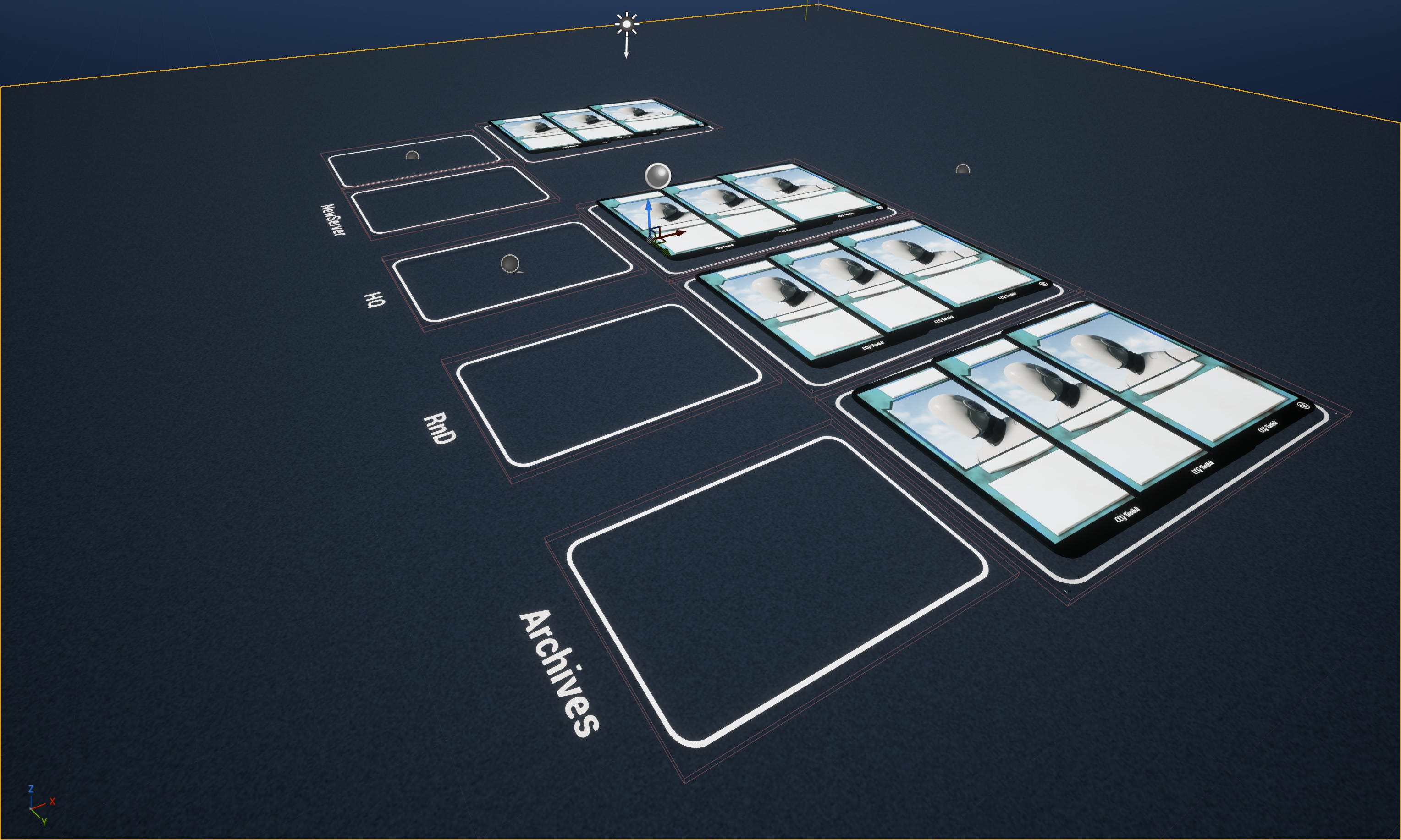
The board is taking shape. Zones for servers, the runner’s rig (still missing), the central areas where both players interact. The physical aspect of the game is becoming visible for the first time.
It is still early. There is no gameplay loop running end to end yet. But the table exists. The space where the game will happen is starting to look like the space where the game will happen.
Where This Leaves Us
Six weeks of work. A codebase, a card pipeline, a network layer, a board that is beginning to resemble something real.
There is a lot still to build: the full run system, ICE encounters, economy, win conditions, proper card art, sound, UI polish. The list is long and I am one person.
But the list felt longer when I was staring at a blank project and talking myself out of starting. At least now there is something to look at.
Next week I’ll get back into the systems: the action manager, turn structure, and how the game decides what you are and aren’t allowed to do on any given turn.
See you then.
Supporters
I would like to extend my sincere gratitude to the following individuals who have chosen to support this project. Your contribution means a great deal and helps keep this work moving forward.
Jared Meritt
Marcel Encarnacao
If you would like to appear here, you can support the project via the buymeacoffee or by subscribing to get extra content and preview of the posts.